
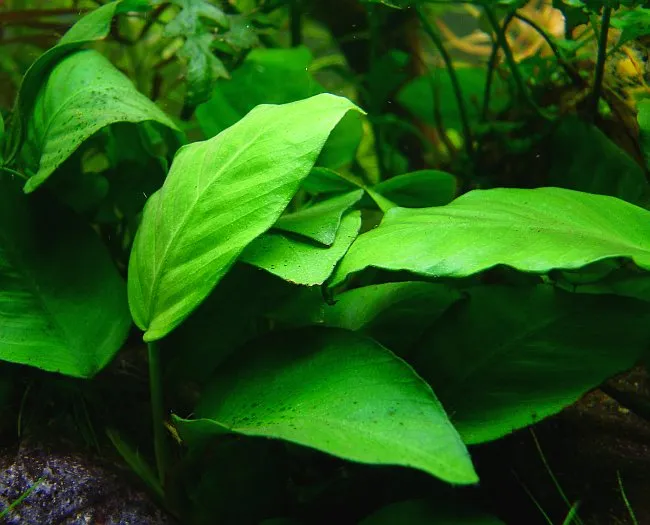
Anubias Barteri
Anubias barteri var. barteri
Edited by Ivan F. · Reviewed
Beginner verdict
A sturdy, broad-leaved plant that thrives in low light and shrugs off plant-eating fish. It grows slowly and does not need special substrate or added carbon dioxide, which makes it one of the safest first plants. Attach it to driftwood or stone and leave it alone.
- Light
- Low
- CO2
- Not Needed
- Growth
- Slow
- Placement
- Attached to Hardscape
- Max height
- 12 in (30 cm)
- Temperature
- 72–79 °F (22–26 °C)
- pH
- 5–8
- Needs substrate
- No
Anubias Barteri care mistakes to avoid
- Never bury the rhizome, because it will rot.
- Keep it out of direct light. Slow leaves collect algae quickly in bright tanks.
- Do not expect fast growth, as new leaves appear only slowly.
- Attach it securely, because curious fish can knock it loose before the roots grip.
How it spreads
Split the rhizome with a clean blade, keeping several leaves on each piece.
Anubias Barteri FAQ
How tall does Anubias Barteri grow?
Tropica lists growth to about 30 cm (12 in) in a tank, and it can grow larger over time.
What light does Anubias Barteri need?
Tropica rates its light demand as low. Most standard aquarium lights are enough.
Will fish eat anubias?
Rarely. Its tough, bitter leaves resist most plant-eating fish, which is why it suits fish that destroy softer plants.
How do I attach anubias?
Tie it with thread or use a dab of aquarium-safe super glue on the rhizome. The roots grip the surface over a few weeks.
Where to buy Anubias Barteri
We have not found a store that sells Anubias Barteri under its scientific name yet. We add stores as we confirm them.
Live animals and plants travel by courier. Check the store's live-arrival guarantee, and only buy once your tank has cycled (see how to cycle a fish tank).
Some US states restrict certain species. Check our US state aquarium rules table and your state's own rules before you buy.